Research Studies
THE COMPARATIVE USE OF MIRRORLESS AND DSLR CAMERAS IN MEDICAL RECORDING ENVIRONMENTS
In Progress
This qualitative study explores the experiences and perspectives of medical professionals who use mirrorless and DSLR cameras in clinical recording and documentation. With imaging technologies evolving, healthcare environments are adopting mirrorless systems due to their compact design, electronic viewfinders, and advanced sensor capabilities, however; the question remains about their reliability, workflow efficiency, and adaptability compared to traditional DSLR systems. Through in depth interviews and thematic analysis, this study will examine how these professionals perceive the advantages, the limitations, and the overall usability of both systems. The findings are expected to inform future purchasing decisions, enhance training practices, and support better integration of digital imaging systems in medical environments.
Macro Tilt-Shift
Macro photography captures the unseen details in life up-close. These are shortsighted though due to the small focal plane that a macro lens creates. This can lead to only capturing a fragment of the unseen. The purpose for this poster is to provide a re-imagined system to this focal plane problem. To solve this issue, the tilt-shift camera rig will be utilized. The tilt-shift rig has the ability to manipulate the plane of focus by tilting the lens board, we can change the view and capture a fuller image with minimal fall off. This will be achieved by mounting the macro lens to the tilt-shift rig and mounting the whole system on a stack shot rail system to get focal slices down to the micrometer difference.

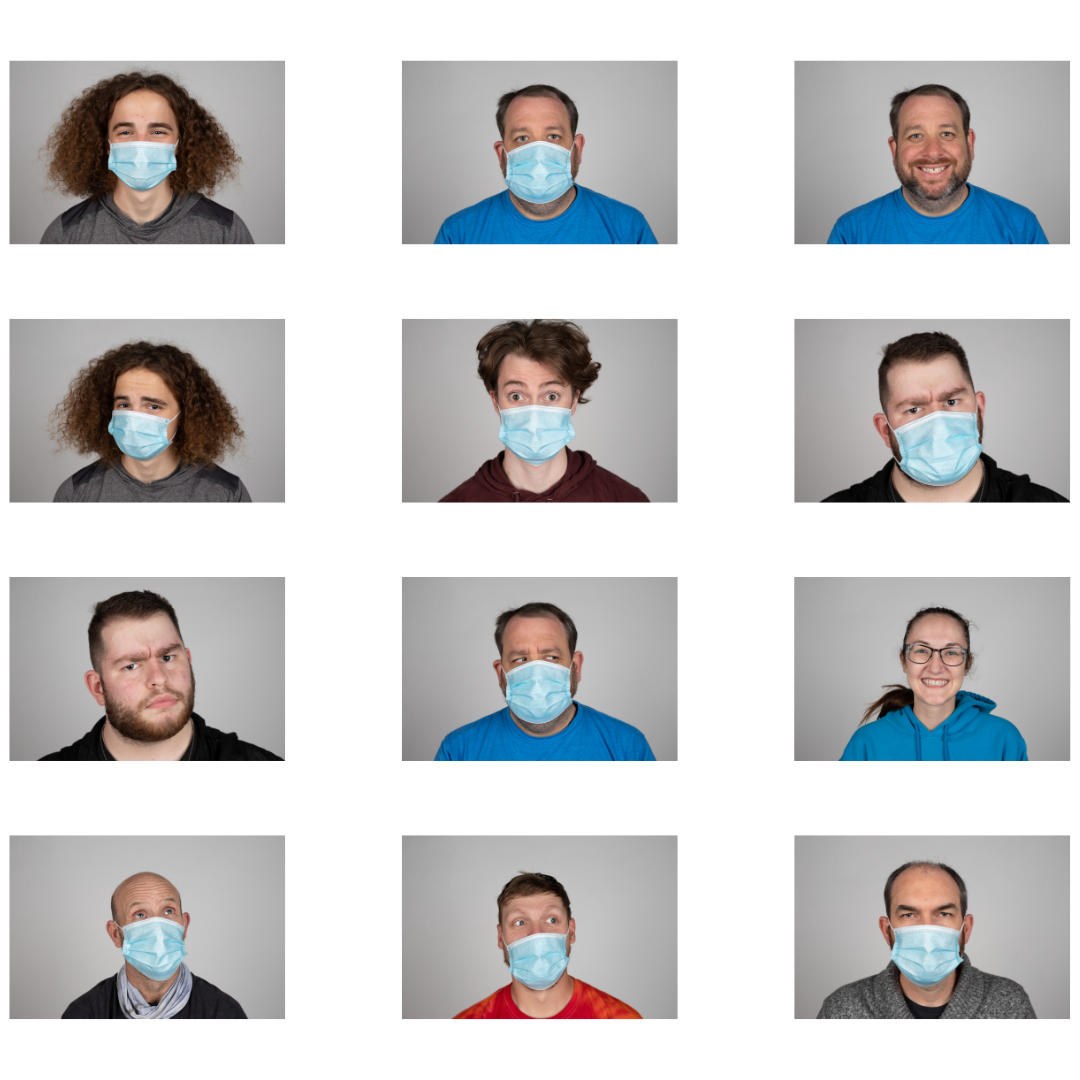
Emotions Under the Mask
Emotions have always been apart of human nature and interaction. We as humans display emotions in various facial expressions and the brain interprets these expressions to evaluate persons’ emotional state. The brain looks that the face and evaluates the mouth, cheeks, eyes eyebrows, and forehead to interpret the expression. With the COVID-19 pandemic taking place in our world, we are taking measures to reduce risk of transition by utilizing masks; however, with the use of a mask, we lose sight of a majority of the face which provides us a bunch of information such as emotion through facial expression.